The road that built Lirel
The highway that changed everything
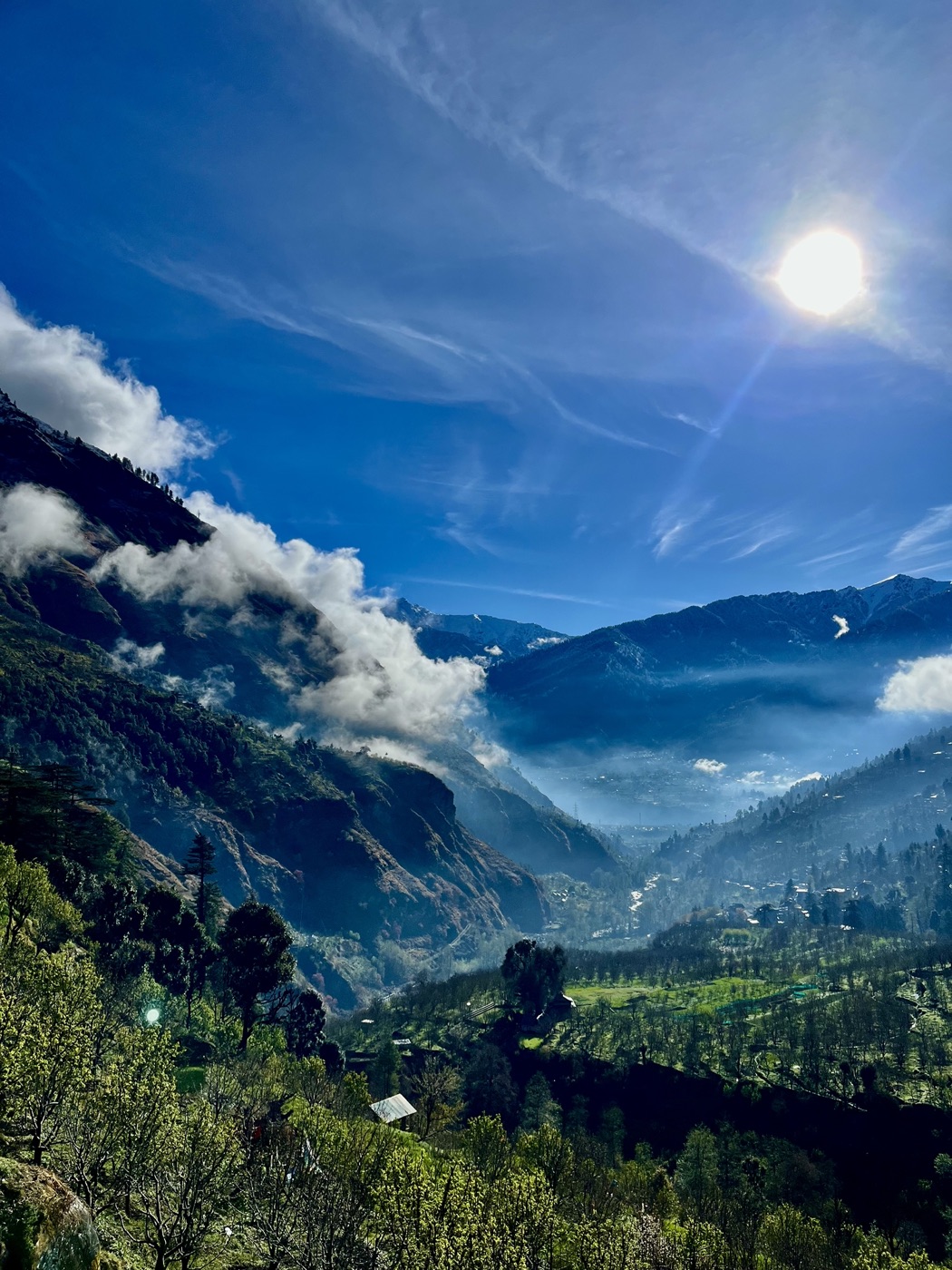
In March 2026, Kushal Lokhande packed his bags, got on his motorcycle in Pune, and rode north into Himachal Pradesh alone. He had built and shipped Travee.ai to the App Store, was running Traveezo Technologies as his company entity, and was thinking hard about what to build next. The ride was supposed to be a break. It turned into a research trip that nobody had planned for.
Every stop on that ride forced proximity. A chai stall at 10,000 feet. A puncture on a mountain pass. A wrong turn that led three riders to the same dhaba, all of whom had taken the wrong turn. Every moment of friction, every pause forced by terrain, weather, or exhaustion, became a conversation. And every conversation became something real.
Out of the forty-odd people Kushal spoke to across the trip, three conversations stopped him completely. The first was with a chemical engineer using AI to run thought experiments in chemistry, exploring combinatorial research paths and probing fundamental questions that would take years of physical experimentation to answer. They spent an hour together on an embeddings problem the engineer was working through. Kushal could help. The engineer expanded his thinking on where AI was going in hard sciences. Neither of them had planned that conversation. The mountain had simply put them in the same place.
The second conversation was with a founder building a lab-grown diamond jewellery brand, using AI to generate and iterate on jewellery designs at a speed that traditional design cycles simply do not allow. What struck Kushal was the shift in how the founder was thinking. Time-to-market had compressed so dramatically that the entire product development mindset had changed. Value was being created in ways that had not existed two years earlier.
The third was with a young first-time founder, early stage, who had built something real and was beginning to think about raising. He asked about deal structures, convertible notes, valuation caps, and how to think about dilution at that stage. They spent an hour on it together. He left with a framework. Kushal left with a reminder that sometimes the most valuable thing one person can offer another is clarity on the road just ahead.
40+
People spoken to across the Himachal trip
3
Conversations that stopped everything and changed something
10,000ft
The altitude at which the founding insight arrived
0
Of those conversations were scheduled
The problem hiding in plain sight
Kushal came back to Bangalore and began seeing the same problem everywhere he looked. He started paying attention to a regular Tuesday in the city. At his usual cafe by 9, there were forty-something people around him. At a Koramangala coworking space by noon, there were a hundred more. Lunch at the complex nearby. Evening wind-down back at the cafe.
Conservatively, three hundred people were in his physical proximity across a single day. Professionals, founders, engineers, investors, and operators. People building things, solving things, and funding things. The total number of meaningful conversations across that day was zero. Perhaps one on a particularly good day.
The Himachal highway had a fraction of the people and many times the meaningful interactions. The mountain had friction that forced proximity. The city had density but no mechanism to surface who was worth talking to. The question that kept returning to Kushal was what it would look like if proximity and context could work together in the same environment.
The city promised collision, the happy accident of being in the right place at the right time with the right person. What it delivered was proximity without context. Millions of people sharing the same streets, the same cafes, the same office complexes, each carrying around a version of what someone nearby desperately needed, with no way to surface it.
The "what do you do" problem
The more Kushal thought about it, the more he saw that the professional networking infrastructure that had been built was designed around the wrong interaction. The networking event existed because someone noticed that city density was being wasted and tried to solve it. The solution arrived at was compressing the random into an unnatural container.
Badge. Warm drink. Someone walks up. "So, what do you do?" That one question, asked a hundred times a night across Bangalore's professional circuit, is the sound of a city trying to brute-force something that should happen naturally. It is a clumsy, exhausting, hit-or-miss filter for the one thing everyone actually wants to know in the first thirty seconds, which is whether this person is relevant to them right now.
The founding insight: proximity plus context
By the time Kushal sat down to articulate what he was building, three ideas had crystallised from everything he had observed on the highway, in Koramangala cafes, at networking events, and in conversations with founders and professionals across Bangalore and Pune.
Insight one — Relevant proximity drives outcomes
More interactions lead to more conversations. More conversations lead to more transactions. More transactions mean more growth, more livelihoods, and more prosperity for everyone involved. The Himachal highway proved this in real time. Every chai stop forced a conversation, every conversation went somewhere real, and the compounding effect was visible in every kilometre of the journey.
Insight two — Context is the missing layer
The city had the density. What it lacked was the signal. Nobody knew what the person two tables away was working on, what they needed, or who they were looking for. The invisible room, the version of every space where all of that context is visible, had never been built as a product.
Insight three — The best professional interactions are never scheduled
They happen because two people end up in the same place at the right moment with the right context. Serendipity is proximity plus context plus timing. Three variables, none of them actually random. The question Kushal kept returning to was what it would look like to make serendipity repeatable.
Building Lirel
Kushal shipped the Lirel iOS app and went straight to the streets. To the cafes, the coworking spaces, and the professional communities of Koramangala and Whitefield. He placed QR tent cards on tables, seeded WhatsApp groups, and attended every professional event he could find in Bangalore and Pune, including Marathi business communities, IIM alumni gatherings, Antler residency events, and regional professional circles, explaining the product in person one conversation at a time.
The response was immediate and consistent. Nobody needed a long explanation. The moment Kushal described walking into a room and knowing who around you is relevant to what you are building or looking for, people nodded before he finished the sentence. The problem was real. The need was there. The timing felt right.
Early users started showing up in the feed. Rahul Thakor, Practice Lead for Data Science at Mindstix in Pune. Harish, Lead Data Scientist at Blackstraw. Tarun, Data Scientist at Coles Group in Melbourne. Pranit Patil, AVP at HSBC leading Finance Analytics with AI and ML. Shruti Thokal, Senior Healthcare Business Analyst at CitiusTech. Akash, Senior Research Engineer at Ola Electric working at the intersection of Computer Vision, Deep Learning, and Robotics. Each profile raised the quality of the feed around them. Each connection proved the thesis.
One of the early users opened Lirel in Pune and received a notification. Someone nearby with an interesting context. Girish Dattatraya Khole, a Data Engineering Leader who was also, somehow, a farmer. They connected, realised they were minutes apart, and the next day the user was at Girish's hydroponic farm in Hinjewadi. A farm in Hinjewadi. Ten minutes from two lakh tech workers who had no idea it existed. He bit into a cucumber and for the first time in years something in Pune reminded him of home. That conversation happened because two people were in the same place at the same time and Lirel made it visible.
The idea in one line
Every room you walk into has two versions. The one you see, which is tables, laptops, headphones, and people staring at screens. And the one you cannot see, which is what everyone around you is working on, what they need, who they are looking for, and what they would offer the right person if they only knew they were nearby.
Lirel makes the invisible room visible. In the room you are already sitting in, at the moment that matters, with the context that makes the conversation worth having.
Proximity is the new currency. Most people are leaving it on the table. The professionals around you, at your cafe, your coworking space, your office complex, your residential society, your airport lounge, are invisible to you right now. Lirel changes that.